


CRISPR and the Future of Biotech
Quick Summary
- CRISPR is a gene-editing technology that lets scientists make targeted changes to DNA.
- One of CRISPR’s best uses is in gene and cell therapy, including correcting mutations that cause diseases like sickle cell anemia.
- With all the potential and current benefits CRISPR has, it is clear that it’s not just a niche topic, it’s become part of mainstream biotechnology.
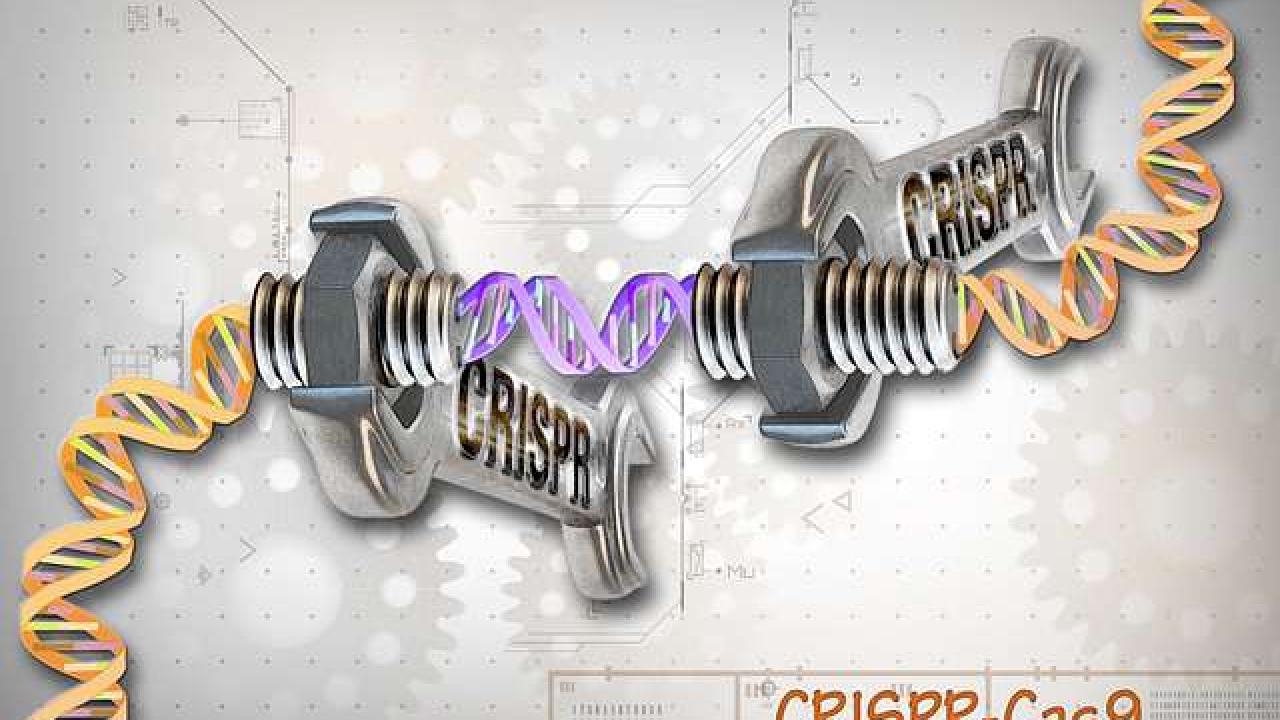
For a long time, biotechnology has relied on tools that allow scientists to study and manipulate DNA. However, few discoveries have been as innovative as CRISPR. CRISPR stands for Clustered Regularly Interspaced Short Palindromic Repeats, and is a gene-editing technology that lets scientists make targeted changes to DNA. While the name may sound complex, the actual idea is simple. CRISPR acts like a pair of molecular scissors to cut DNA at a specific location so it can be edited.
According to Stanford bioengineer Stanley Qi, “CRISPR is not merely a tool for research. It’s becoming a discipline, a driving force, and a promise that solves long-standing challenges from basic science, engineering, medicine, and the environment.”
Qi summarizes why CRISPR is so transformative: it not only edits DNA, it changes what biotechnology can do. CRISPR’s basic mechanism involves a guide molecule that leads molecular “scissors” to a specific DNA sequence. Then, the system can cut and modify DNA at that spot, allowing scientists to fix mutated genes, regulate gene activity, or insert new genetic information. Older methods like ZFNs (zinc-finger nucleases) and TALENs (transcription activator-like effector nucleases) require custom proteins to recognize DNA, but CRISPR uses a programmable guide RNA that is much easier to change.
One of CRISPR’s best uses is in gene and cell therapy. Gene therapy tries to correct faulty DNA that causes diseases while cell therapy modifies a person’s cells so they perform better. CRISPR has helped people avoid sickle cell anemia by correcting the mutation that causes it. It does so by targeting the genetic mutation responsible for the disease, then either directly correcting the mutation or reactivating fetal hemoglobin, which compensates for defective adult hemoglobin (the underlying cause of sickle cell disease). Previously, there were limited treatment options, such as blood transfusions or bone marrow transplants. Qi believes that CRISPR could one day become a “pillar of medicine,” expanding from single-gene diseases to more complex ones involving multiple genes.
However, CRISPR’s potential spreads beyond treating human diseases. Plant genetic modification began thousands of years ago, before people even knew what DNA was. One of the earliest techniques was selective breeding, where plants with desired traits were mixed together through mating to produce plants with specific characteristics. Another technique is mutation breeding, which relies on exposing plants to radiation and seeing the change. Both these techniques depend on random changes, meaning they are time consuming and laborious. Since then, plant breeders have begun using gene modification to make intentional changes to plant DNA. This is where CRISPR comes in.
CRISPR is so precise that it avoids many of the negative side-effects that older techniques have. When changing plant DNA, CRISPR does not require any foreign DNA. Instead, it alters DNA that the plant already contains. It also allows for greater precision and speed. Though CRISPR isn’t able to efficiently replace older tools yet, as it continues to be refined, it may take over the creation of transgenic crops.
Looking into the future, CRISPR will continue to evolve. Researchers are still developing variations that can further edit genes and introduce new ways of treating disease. Some are also working on using CRISPR to create rapid, portable diagnostics that could provide lab-quality detection in the form of handheld devices to be used in the field. Though CRISPR has already benefitted the biotechnology industry, there are still challenges. The global health review notes that there are three most notable challenges: “ measuring the level of unwanted editing, making editors resistant to naturally occurring mutations, and delivering genome editors.” Scientists are actively working towards improving accuracy and decreasing off-target effects.
With all the potential and current benefits CRISPR has, it is clear that it’s not just a niche topic, it’s become part of mainstream biotechnology. For medical students, future clinicians, public health professionals, and anyone interested in science, understanding CRISPR is important. Its many applications range from curing genetic diseases to protecting global health, and its continued development will influence how biotechnology solves long-standing challenges.
Sources:
https://medium.com/ucsf-magazine/genome-editing-before-crispr-a-brief-history-f02c1e3e2344
https://pmc.ncbi.nlm.nih.gov/articles/PMC8550201/
https://innovativegenomics.org/crisprpedia/crispr-in-agriculture/
https://www.sciencedirect.com/science/article/pii/S2666388021000022
https://news.stanford.edu/stories/2024/06/stanford-explainer-crispr-gene-editing-and-beyond
https://hms.harvard.edu/news/creating-worlds-first-crispr-medicine-sickle-cell-disease